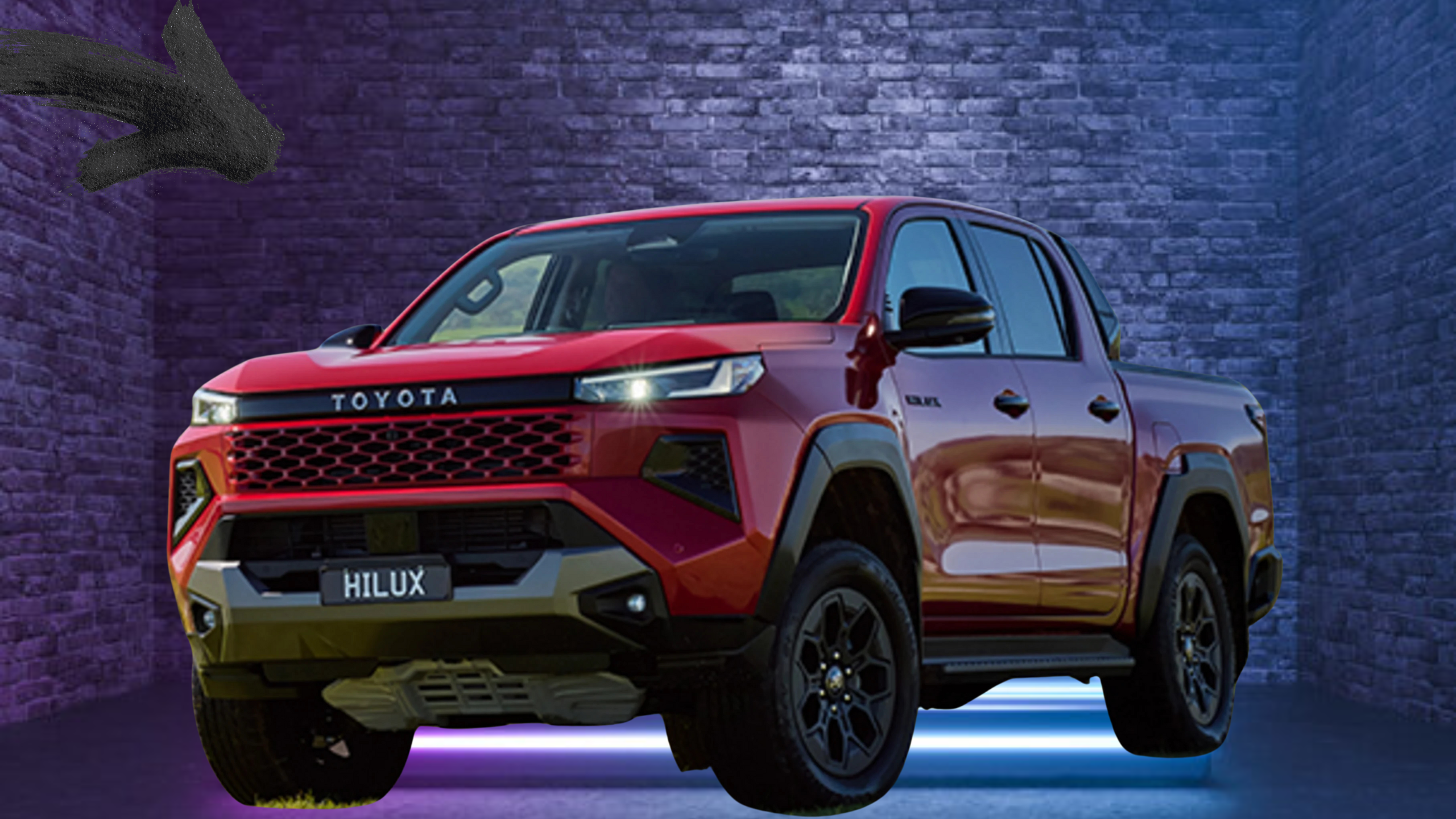
Toyota Hilux 2026 Arrives: The pickup truck segment in India has witnessed gradual evolution rather than revolution. Most offerings prioritize utility over sophistication, functionality over finesse. Toyota has consistently challenged this narrative, and with the ninth-generation Hilux arriving in 2026, the Japanese automaker once again redefines expectations. This isn’t merely an incremental update—the 2026 Toyota Hilux represents a fundamental reimagining of what premium pickup trucks can deliver to Indian buyers seeking uncompromising capability wrapped in modern refinement.
Design Evolution: Commanding Presence with Contemporary Sophistication
Walking around the 2026 Hilux reveals Toyota’s ambitious design philosophy. Gone are the rounded, conservative lines that characterized previous generations. The new model embraces sharper, more aggressive character lines that communicate strength without sacrificing elegance. The massive front grille dominates the fascia, featuring prominent horizontal slats that frame the bold “TOYOTA” lettering rather than the traditional emblem. This design language mirrors the current Land Cruiser aesthetic, positioning the Hilux firmly within Toyota’s premium off-road family.
Slimmer LED headlamps with distinctive C-shaped daytime running signatures create an instantly recognizable face that looks contemporary yet purposeful. The sculptured hood with pronounced power bulges hints at the performance lurking beneath, while flared wheel arches accommodate larger wheels and emphasize the truck’s robust stance. Along the profile, crisp body lines enhance visual drama and improve aerodynamic efficiency—a crucial consideration for a vehicle that frequently operates at highway speeds while carrying substantial loads.
The rear treatment showcases vertically stacked C-shaped LED tail lamps that complement the front lighting theme. The loading bay gate features “TOYOTA” badging, maintaining brand consistency, while high-mounted stop lamps improve visibility for following traffic. The overall dimensions measure approximately 5325mm in length, 1855mm in width, and 1800-1815mm in height depending on variant, with a wheelbase spanning 3085mm. This substantial footprint provides excellent load-carrying capacity—up to 1000kg in the flatbed—while ground clearance exceeding 280mm ensures genuine off-road capability.
Interior Transformation: Premium Cabin Meets Practical Functionality
Stepping inside the 2026 Hilux reveals perhaps the most dramatic transformation. Previous generations offered functional but spartan interiors suitable for work sites yet uncomfortable for family duties. The new model bridges this divide admirably. Soft-touch materials adorn the dashboard and door panels, creating tactile luxury that rivals established SUVs. The all-black interior theme conveys sophistication while remaining practical for commercial applications where durability matters.
Twin 12.3-inch displays dominate the dashboard architecture. The driver’s digital instrument cluster presents customizable information ranging from traditional speedometer and tachometer displays to detailed off-road metrics showing differential lock status, pitch and roll angles, and terrain modes. The central touchscreen infotainment system supports wireless Apple CarPlay and Android Auto, ensuring seamless smartphone integration without cable clutter. Connected car features enable remote vehicle monitoring, location tracking, and over-the-air updates for navigation maps.
Seating comfort receives significant attention. The front seats gain ventilation functionality, crucial for Indian summers where cabin temperatures can become oppressive. Eight-way power adjustment for the driver’s seat accommodates various body types, while improved cushioning and lumbar support reduce fatigue during long highway stretches. Rear passengers benefit from enhanced legroom compared to previous generations, though the bench remains upright—a compromise inherent to pickup truck architecture prioritizing loading bay length over rear passenger luxury.
Climate control advances to dual-zone automatic operation in higher trims, allowing driver and passenger independent temperature preferences. Rear AC vents improve cooling for second-row occupants, addressing complaints from current Hilux owners. Storage solutions abound, including a wireless charging pad for compatible smartphones, multiple USB Type-C ports throughout the cabin, bottle holders in all four doors, and generously sized door pockets. A panoramic sunroof isn’t offered—consistent with Toyota’s durability-first philosophy for utility vehicles—but buyers requiring this feature rarely choose pickup trucks anyway.
Powertrain Options: Multiple Paths to Power
The 2026 Hilux arrives with unprecedented powertrain diversity, reflecting global automotive trends toward electrification while respecting established diesel preferences in markets like India. The proven 2.8-liter four-cylinder turbocharged diesel remains the cornerstone, now enhanced with 48-volt mild-hybrid technology. This system significantly improves both performance and efficiency through electric torque assist during acceleration and regenerative braking energy recovery.
Output figures reach 204 PS (201 horsepower) with peak torque climbing to 500 Nm, providing ample capability for towing caravans, boats, or heavy trailers while maintaining respectable highway performance. The mild-hybrid system contributes approximately 10-12 Nm additional torque during acceleration, reducing turbo lag and improving drivability in stop-and-go traffic situations. Transmission options include a six-speed manual for purists preferring traditional control or a smooth-shifting six-speed torque converter automatic that intelligently adapts shift patterns based on driving style and load conditions.
India may also receive the 2.7-liter naturally aspirated petrol engine paired with mild-hybrid assistance, though diesel will likely dominate sales given fuel availability at remote locations and superior torque characteristics for heavy-duty applications. Fuel efficiency estimates suggest approximately 11-13 km/l for diesel variants under mixed driving conditions, though actual figures vary significantly based on load, terrain, and driving habits.
The four-wheel-drive system operates through electronically controlled transfer cases offering high-range and low-range operation. High-range 4WD suits slippery conditions like wet roads or loose gravel, while low-range 4WD provides maximum torque multiplication for extreme off-road scenarios requiring crawling over rocks or climbing steep inclines. Electronic differential locks—both center and rear—can be engaged on demand, ensuring maximum traction when individual wheels encounter surfaces with vastly different grip levels.
Electric and Hydrogen Futures: Preview of Tomorrow’s Hilux
Toyota unveiled a battery-electric Hilux prototype featuring a 59.2 kWh battery pack delivering approximately 242 km WLTP range. The dual-motor setup produces 196 PS and 205 Nm, with four-wheel drive maintained through front and rear electric axles. While range appears modest compared to passenger EVs, it aligns with typical daily commercial vehicle usage patterns. Fast charging capability would enable mid-day top-ups during lunch breaks, expanding practical operating radius.
More intriguing is Toyota’s confirmation of a hydrogen fuel-cell electric Hilux variant scheduled for 2028. This technology combines electric vehicle refinement with rapid refueling comparable to conventional vehicles—a compelling proposition for commercial fleets requiring maximum uptime. India’s developing hydrogen infrastructure presents challenges, though government initiatives suggest growing commitment to this technology. Neither electric nor hydrogen variants are confirmed for immediate Indian launch, though future availability seems likely given Toyota’s global electrification strategy.
Technology Suite: Intelligence Meets Capability
Modern pickup trucks must satisfy increasingly sophisticated buyers expecting advanced driver assistance systems previously reserved for luxury cars. The 2026 Hilux delivers comprehensively. Safety features include seven airbags, electronic stability control, and hill descent control as standard, establishing a strong foundation. Higher variants add Toyota Safety Sense 3.0, encompassing adaptive cruise control that maintains preset following distances from preceding vehicles, lane departure alert with steering assist that gently corrects unintended lane drift, and pre-collision system with autonomous emergency braking detecting vehicles and pedestrians.
Blind-spot monitoring with rear cross-traffic alert proves invaluable given the Hilux’s substantial dimensions—parallel parking and reversing become less stressful with systems actively monitoring blind zones. The 360-degree camera system stitches feeds from four cameras into a bird’s-eye view, simplifying maneuvering in tight spaces or positioning precisely when backing up to attach trailers. Multi-terrain monitor displays live camera feeds from front, rear, and sides, allowing drivers to navigate narrow trails while monitoring clearances to obstacles.
Off-road technology receives significant attention. Multiple terrain modes optimize throttle response, transmission shift points, traction control intervention, and differential lock engagement for conditions ranging from mud and sand to snow and rock. These systems essentially provide idiot-proof off-roading—selecting the appropriate mode and trusting the electronics allows novice drivers to traverse terrain that previously demanded expert technique. Water wading capability reaches 700mm, sufficient for crossing swollen rivers or flooded roads during monsoon seasons.
Real-World Performance: Beyond Specification Sheets
Specifications tell partial stories; actual driving experiences reveal complete narratives. Current Hilux owners in India provide valuable insights into ownership realities that prospective buyers should consider. A detailed ownership review on Team-BHP from a verified owner with 7,000 kilometers documented reveals both strengths and compromises inherent to pickup truck ownership in Indian conditions.
The reviewer praised utility aspects, stating the Hilux served purposes traditional SUVs couldn’t match due to open loading bay versatility. However, he noted: “On the road though is a slightly different story. While it handles the big bumps alright, the broken roads make it a bumpy ride.” This reflects pickup truck suspension tuning prioritizing load-carrying over empty ride comfort—a universal compromise across all body-on-frame vehicles. (Source: Team-BHP)
Customer reviews on CarDekho present predominantly positive sentiment. One enthusiast declared: “One of the most beautiful car and very comfortable. This is one of the best off-road vehicle in india.” Another buyer emphasized versatility: “It is a car fullfil any ofroading adventure with its 4 by 4 capability and it’s engine and gearbox is very refine.” (Source: CarDekho)
However, not all experiences prove flawless. Some buyers reported specific concerns about daily usability. Practical observations from CARS24 reviewers noted: “Ride quality is a bit bumpy when the bed is empty, but it handles rough roads very well.” This reinforces the understanding that pickup trucks excel in their intended roles—hauling cargo, towing trailers, conquering off-road terrain—while making compromises in unladen comfort that may disappoint buyers seeking SUV-like refinement. (Source: CARS24)
Professional automotive journalists from Ackodrive emphasized capability while acknowledging limitations: “Switch it to 4 Low and switch on the Hill descent control and the Hilux takes any incline with ease without you using the brakes.” Yet they also cautioned about urban challenges: “The car gets a very low turning radius, so good luck to you when trying to navigate hair pin bends or just trying to take a U-turn.” (Source: Ackodrive)
These balanced perspectives establish realistic expectations. The Hilux excels magnificently within its design parameters but shouldn’t be evaluated using SUV criteria. Buyers requiring primarily on-road comfort for family transport should consider alternatives like the Fortuner. Those genuinely needing pickup truck capabilities—regular cargo hauling, frequent off-road excursions, towing duties—will find the Hilux’s compromises entirely justifiable given its unmatched versatility.
Technical Specifications Comprehensive Overview
| Category | Specification Details |
|---|---|
| Engine Options | 2.8L turbo-diesel (204 PS, 500 Nm) + 48V mild-hybrid; 2.7L petrol (possible India variant) |
| Transmission | 6-speed manual / 6-speed automatic torque converter |
| Drivetrain | Rear-wheel drive (base) / Four-wheel drive with electronic transfer case (4H/4L) |
| Suspension | Double wishbone front / Leaf spring rear with gas-charged dampers |
| Brakes | Ventilated disc front / Solid disc rear with ABS, EBD, Brake Assist |
| Dimensions | Length: 5325mm, Width: 1855mm, Height: 1800-1815mm, Wheelbase: 3085mm |
| Ground Clearance | 286mm (approximate, variant dependent) |
| Payload Capacity | Up to 1000kg in loading bay |
| Towing Capacity | Up to 3500kg (braked trailer, depending on variant) |
| Fuel Tank | 80 liters |
| Wheels & Tires | 17-inch / 18-inch alloy wheels; 265/65 R17 or 265/60 R18 all-terrain tires |
| Seating Capacity | 5 (Double Cab configuration) |
Safety Architecture: Comprehensive Protection Systems
| Safety Feature | Implementation Details |
|---|---|
| Airbags | 7 airbags (driver, passenger, side, curtain, driver knee) |
| Active Safety | Vehicle Stability Control (VSC), Traction Control (TRC), Hill Assist Control (HAC) |
| ADAS Features | Pre-Collision System, Lane Departure Alert with Steering Assist, Adaptive Cruise Control |
| Parking Assistance | 360-degree camera, front & rear parking sensors, Blind Spot Monitor, Rear Cross Traffic Alert |
| Off-Road Safety | Hill Descent Control, Multi-Terrain Select, Downhill Assist Control |
| Structural | High-strength steel ladder frame, reinforced cabin structure, side-impact protection beams |
| Lighting | Full LED headlamps with auto leveling, LED fog lamps, LED DRLs, LED tail lamps |
Variant Structure: Tailored to Diverse Needs
| Variant Tier | Key Differentiators |
|---|---|
| Base Variant | 2WD, manual transmission, halogen lighting, fabric upholstery, 8-inch touchscreen, basic safety features |
| Mid Variant | 4WD, automatic option available, LED lighting, semi-leather upholstery, larger touchscreen, added convenience features |
| Top Variant | 4WD standard, automatic transmission, full LED lighting, leather upholstery, premium audio, complete ADAS suite, advanced off-road modes |
| Black Edition | Exclusive all-black exterior accents, black alloy wheels, premium interior treatment, enhanced styling elements |
Note: Specific variant nomenclature and equipment levels will be confirmed closer to Indian launch. Toyota typically offers 3-4 trim levels across manual and automatic transmissions.
Market Positioning: Competing in Specialized Segment
The premium pickup truck segment in India remains nascent compared to mature markets like Thailand, Australia, or South Africa where these vehicles dominate sales charts. Current competition centers primarily around the Isuzu V-Cross, which established the lifestyle pickup category but faces aging platform constraints. Mahindra’s upcoming Scorpio-N-based pickup truck will intensify competition, likely offering aggressive pricing though potentially lacking the Hilux’s global pedigree and proven reliability.
Expected pricing spans approximately Rs. 35 to 45 lakh (ex-showroom), positioning the Hilux as a premium proposition requiring careful consideration. This substantial investment buys capabilities no conventional SUV matches—legitimate off-road prowess, cargo versatility, towing capacity—alongside Toyota’s legendary reliability and extensive service network. Resale values remain strong; current-generation Hilux models command impressive prices in used markets, reflecting enduring demand and Toyota brand equity.
Target buyers typically fall into several categories: adventure enthusiasts requiring genuine off-road capability for remote camping and overlanding expeditions; business owners needing cargo versatility for transporting equipment or inventory; rural property owners managing farms or estates where pickup utility proves indispensable; and automotive collectors appreciating the Hilux’s global iconic status.
Ownership Considerations: Beyond Purchase Price
Prospective buyers must evaluate total ownership costs beyond initial purchase price. Fuel consumption averaging 11-13 km/l for diesel variants means annual fuel expenses reaching significant figures for high-mileage drivers. Insurance premiums for vehicles in this price bracket typically run Rs. 50,000-70,000 annually, though actual rates depend on location, driver profile, and chosen coverage levels.
Maintenance follows Toyota’s reputation for reliability and reasonable service costs. Scheduled maintenance intervals occur every 10,000 kilometers or six months. Expected costs for routine servicing remain moderate—approximately Rs. 8,000-12,000 for basic services, Rs. 15,000-25,000 for major services including consumables like brake pads or air filters. Toyota’s extensive dealership network spanning urban centers and smaller towns ensures accessible service, though remote locations may require planning for maintenance visits.
Spare parts availability benefits from Toyota’s market presence and the Hilux sharing numerous components with the Fortuner and Innova platforms. This parts commonality reduces costs and improves availability compared to lower-volume imports. However, specialized off-road components or body panels may involve longer lead times given relatively limited sales volumes.
Launch Timeline and Availability
The new-generation Toyota Hilux will launch in the UK market first in June 2026, followed by other global markets. Indian introduction typically follows global launches by 6-12 months, suggesting late 2026 or early 2027 arrival. Toyota’s strategy likely involves local assembly at the Bidadi, Karnataka facility where current Hilux, Fortuner, and Innova models are manufactured. This approach maintains competitive pricing while supporting government initiatives encouraging domestic manufacturing.
Initial launch will probably focus on diesel-automatic variants targeting lifestyle buyers and commercial customers seeking convenience. Manual transmission options follow based on demand assessment. Electric and hydrogen variants remain future possibilities, though near-term availability seems unlikely given infrastructure constraints and Toyota’s cautious electrification approach in India.
Expert Perspective: Balanced Assessment
Having extensively covered the automotive industry for over a decade, including multiple off-road expeditions and commercial vehicle evaluations, I’ve witnessed the pickup truck segment’s gradual evolution in India. The 2026 Hilux represents Toyota’s most comprehensive effort yet to mainstream this vehicle category beyond niche enthusiasts.
The design transformation successfully balances tough-truck aesthetics with contemporary styling that won’t feel out of place in urban premium parking lots. Interior improvements address previous-generation criticisms about spartan accommodations, delivering genuine comfort alongside maintained durability. Technology integration reaches parity with established SUVs, eliminating the “compromised” feeling that historically discouraged mainstream buyers.
Powertrain diversity—particularly mild-hybrid augmentation—demonstrates Toyota’s commitment to efficiency without sacrificing capability. The electric prototype, while not immediately relevant to India, signals long-term strategic direction as infrastructure develops. Most importantly, the Hilux retains fundamental attributes that established its legendary status: body-on-frame construction for ultimate durability, proven mechanical components shared across Toyota’s global truck lineup, and off-road capability that genuinely delivers when roads end.
Critical evaluation must acknowledge inherent compromises. Pickup trucks fundamentally prioritize utility over comfort, capability over refinement. Empty ride quality will never match SUVs with sophisticated independent rear suspension. Maneuverability in congested urban environments requires patience given substantial dimensions. Fuel efficiency lags crossover alternatives despite hybrid assistance.
However, for buyers genuinely requiring pickup truck capabilities—whether recreational adventurers, rural property owners, or commercial operators—these compromises prove entirely acceptable given unmatched versatility. The Hilux accomplishes tasks impossible for conventional SUVs while maintaining Toyota’s reliability reputation that justifies premium pricing through lower long-term ownership costs.
Frequently Asked Questions
When will the 2026 Toyota Hilux launch in India?
While global sales commence in June 2026 starting with the UK market, Indian launch typically follows by 6-12 months. Expect availability in late 2026 or early 2027, with official announcements likely at major automotive events like Auto Expo.
Will the electric Hilux come to India?
Toyota has not confirmed electric Hilux availability for India. The battery-electric prototype remains in evaluation stages, with initial focus on markets with established EV infrastructure. Future Indian introduction depends on charging network development and market demand assessment.
How does the 2026 Hilux compare to the current model?
The new generation features completely redesigned exterior and interior, advanced hybrid powertrains, comprehensive technology including ADAS, improved ride comfort, and enhanced off-road capability. It represents a fundamental advancement rather than incremental update.
Is the Hilux suitable for daily city driving?
While capable of city use, the Hilux’s large dimensions, lower fuel efficiency compared to SUVs, and firm ride quality when unladen make it less ideal for exclusively urban usage. It excels when owners regularly utilize its unique capabilities—cargo hauling, off-roading, towing.
What warranty coverage does Toyota provide?
Toyota typically offers 3 years/100,000 kilometers warranty coverage for commercial vehicles including the Hilux. Extended warranty options and service packages will likely be available at purchase, though specific terms will be announced at launch.
Can the Hilux tow caravans or boats?
Yes, with proper equipment the Hilux tows up to 3,500 kilograms (braked trailer). This substantial capacity accommodates most recreational trailers, boats, and equipment trailers. Factory towing package includes reinforced chassis, transmission cooling, and trailer stability control.
How does maintenance cost compare to SUVs?
While absolute service costs run higher than smaller SUVs given larger displacement engines and commercial-grade components, the Hilux benefits from Toyota’s reliability reputation and parts commonality with Fortuner/Innova platforms. Long-term ownership costs remain competitive within the premium segment.
The Verdict: Purpose-Built Excellence
The 2026 Toyota Hilux arrives as a comprehensive evolution addressing previous-generation limitations while amplifying core strengths. It transforms pickup trucks from purely utilitarian workhorses into lifestyle vehicles offering genuine comfort and technology alongside maintained capability. For buyers whose needs align with pickup truck strengths—cargo versatility, towing capacity, off-road prowess, ultimate durability—few alternatives match the Hilux’s complete package.
The substantial pricing reflects this comprehensive capability and Toyota’s premium positioning. However, legendary reliability, strong resale values, and unmatched versatility justify the investment for appropriate use cases. Conversely, buyers primarily seeking on-road comfort for family transport without regularly utilizing pickup-specific capabilities should carefully evaluate whether the Hilux’s compromises align with their priorities.
India’s premium automotive landscape continues expanding as buyers seek vehicles reflecting individual lifestyles rather than conventional categories. The Hilux perfectly embodies this trend—it’s simultaneously capable work truck, adventure enabler, and lifestyle statement. Toyota’s proven reliability and extensive service network provide confidence for the long-term commitment this vehicle represents.
As the segment evolves with increasing competition from Mahindra and potential new entrants, the Hilux’s global heritage and comprehensive capability position it strongly. Whether navigating Mumbai traffic, traversing Himalayan trails, or hauling equipment across rural properties, the 2026 Hilux delivers with characteristic Toyota dependability. For buyers genuinely needing what pickup trucks uniquely offer, the wait for this new generation will prove worthwhile.